 EZ KARERA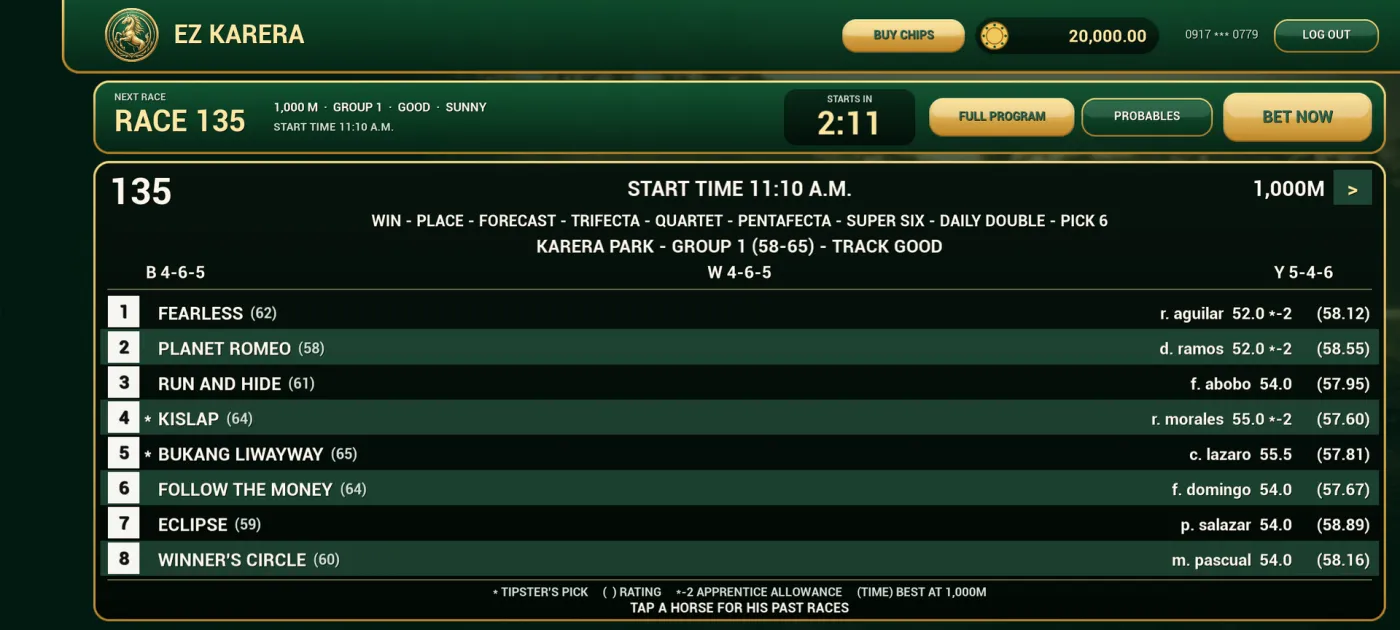
The racing program is where every good bet starts. At the OTB you see karerista bent over it for the whole gap between races, pen in hand. It can look like a wall of numbers, but each column answers one simple question about the horse. Here is how to read it, using the EZ Karera program as the example.
The race header
Before the horses, read the race itself:
- Race number and start time. EZ Karera runs a new race every five minutes, ten races to a card.
- Distance. Some horses are quick over a short trip and fade over a long one. Others need the extra ground.
- Group and rating range. For example "Group 1 (58-65)". Horses are grouped by rating so each race is a fair fight. A horse at the top of the range is, on paper, one of the stronger ones in the field.
- Track condition and weather. A GOOD track runs differently from a wet one, and some horses care more than others.
- The bets on the race. The header lists which bets you can play on this race, including any doubles or Picks that start here.
Each horse's line
Number and name
The number is the one you bet on and the one on the saddle cloth. Bet by the number, not the name.
Rating
The number in brackets after the name is the horse's rating. Higher means better form on recent races. Ratings go up when a horse runs well and down when it runs poorly, so it is a summary of how it has been running, not a promise.
Jockey and weight
Each horse carries an assigned weight in kilos, jockey included. Weight matters most over longer distances: a couple of kilos can be the difference in a close finish.
A "-2" beside the weight marks an apprentice allowance: the jockey is an apprentice and the horse carries two kilos less. Younger jockeys still learning the trade are allowed to carry less weight to make up for their inexperience. Sometimes that allowance is the edge that gets a horse home.
Best time
The time on the right is the horse's best time at today's distance. It tells you what the horse can do when everything goes right. Compare it across the field, but remember a best time may have been set on a faster track or in an easier race.
The tipster's pick
A dot beside a horse marks the tipster's pick. Tipsters are worth reading, and so is the crowd, which follows them. If everyone backs the tipster's pick, it will pay less.
The last five races
In EZ Karera, tap any horse to open its last five races. This is where the real studying happens. Look for:
- Close finishes. A horse beaten by a short margin ran better than its placing says.
- Class changes. A horse coming down from a stronger group can look slow on paper and still be the best in today's field.
- Distance. Did it win at this distance before, or is it trying something new?
- Bad luck. A slow break or a bump at the start can hide a good run.
Put it together with the probables
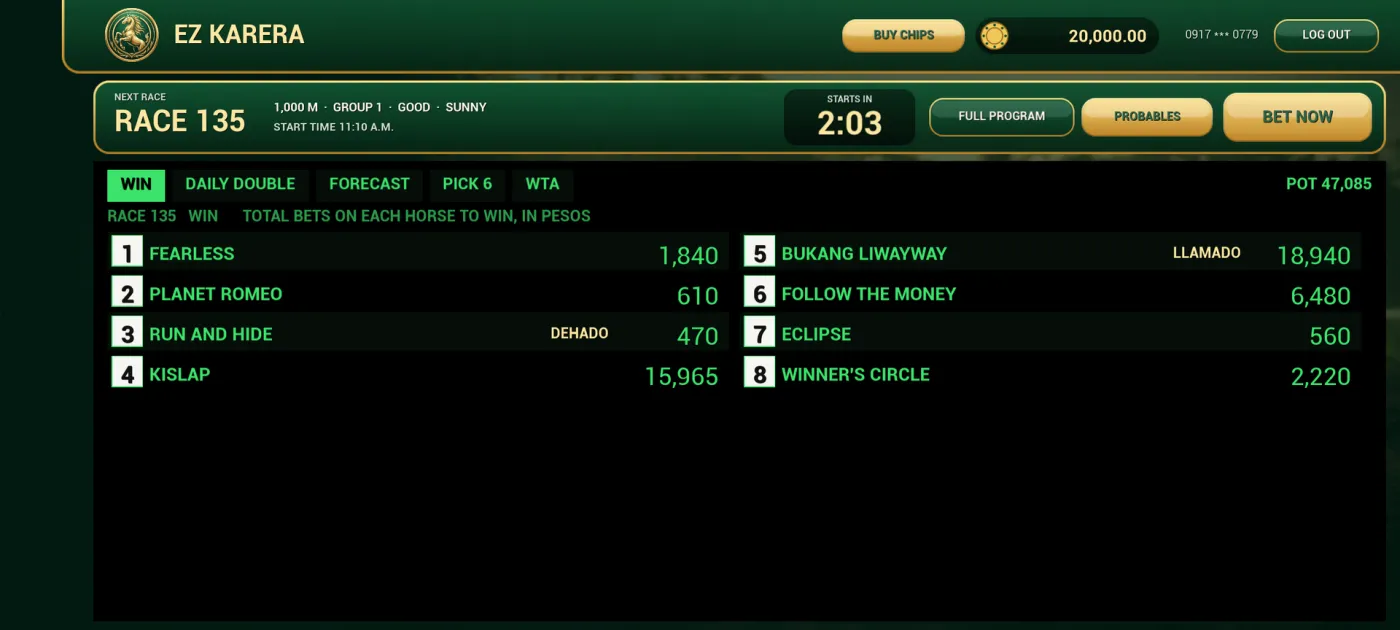
Reading the program tells you which horse you think should win. The probables tell you which horse the crowd thinks should win. Your bet lives in the gap between the two. If you like a horse the crowd is ignoring, that is a dehado worth a look. If you agree with the crowd, ask whether the small dividend is worth the risk.
The best way to learn is to read the program, make a call, then watch the race and check the dividends. With a race every five minutes, EZ Karera gives you that practice all day, with free chips only.
Try it on EZ Karera
EZ Karera is a free 3D karera game with a race every five minutes and 30,000 free chips to start. Android only, 18+.
Become a tester