 EZ KARERA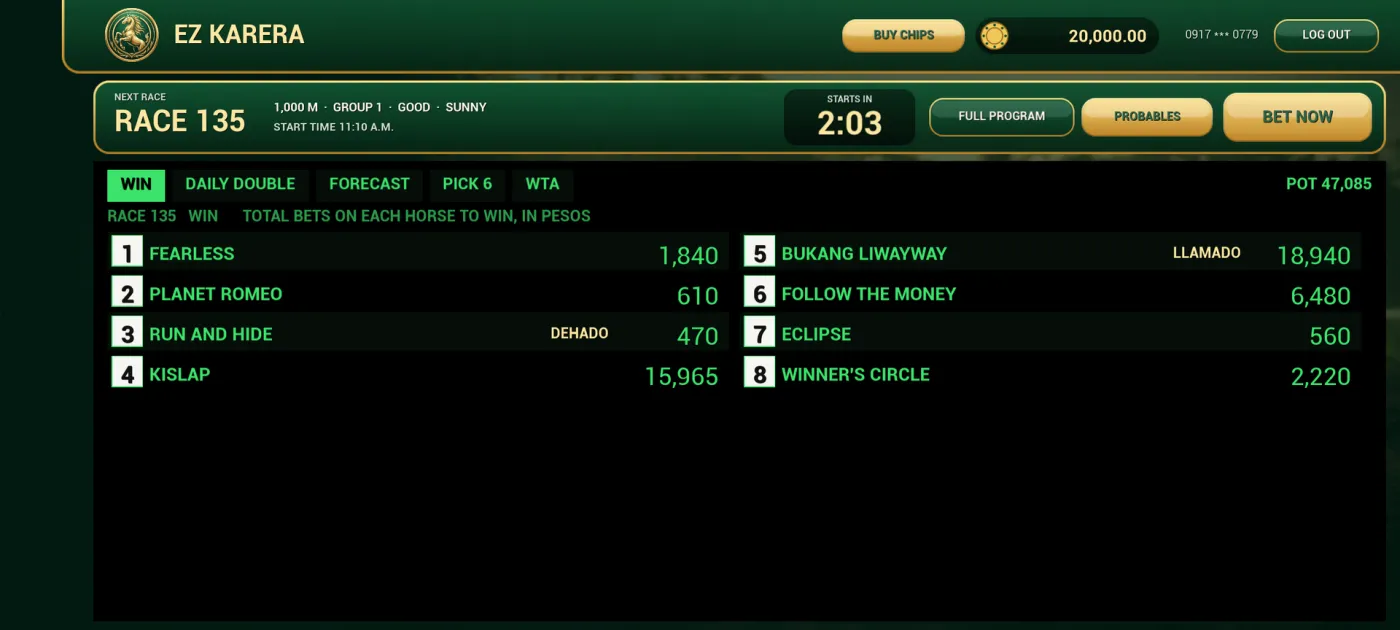
Spend one afternoon at an off-track betting station and you will hear two words more than any horse's name: llamado and dehado. Every karerista uses them, but they mean more than "favorite" and "longshot". They tell you where the money is, and where the money is decides what you get paid.
What llamado means
The llamado is the horse the crowd likes most. In pari-mutuel betting the "crowd likes it most" part is not an opinion: it is the horse with the most money bet on it to win. Because the win pot is split among everyone who backed the winner, the more people back a horse, the less each of them gets if it wins.
That is why a llamado can win and still pay you almost nothing. If most of the pot is already on one horse, a winning ticket gets back the stake plus a small share of everyone else's money.
What dehado means
The dehado is the opposite: a horse that few people backed. If it wins, the pot is shared by only a handful of tickets, so each one pays big. When people at the OTB shout "dehado!" after a race, they are not just saying a longshot won. They are saying the dividend is going to be fat.
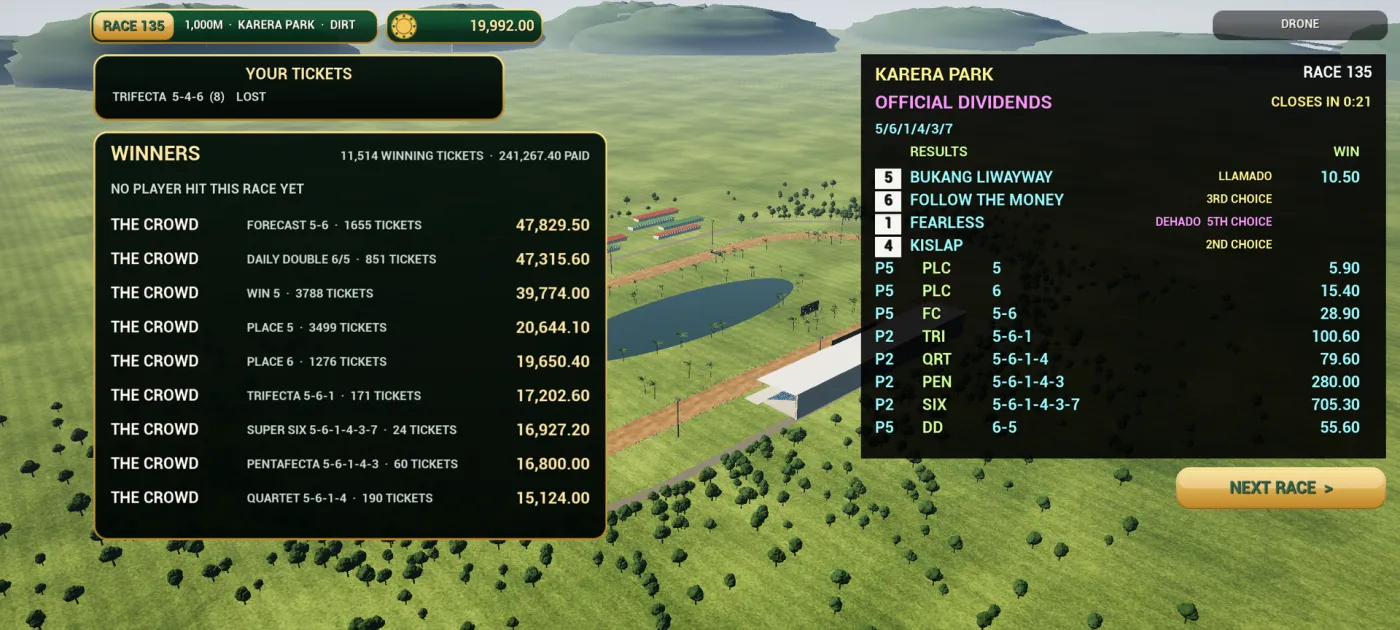
In EZ Karera, every winner on the dividends board is tagged by how the crowd rated it in the win betting: LLAMADO for the first choice, 2ND CHOICE to 4TH CHOICE, and DEHADO for the 5th choice or lower. After a few races you start to feel how often each one comes in.
How to see it before the race: the probables
The probables board shows what each horse would pay if it won, based on the money in the pot right now. The lowest number is the llamado. The highest numbers are the dehados.
Two things to remember about probables:
- They keep moving. Until the race goes off, new money keeps coming in, and every bet changes the price. The number you saw is an estimate, not a locked price.
- Everyone who backs the winner gets the same rate. There is no early price or late price. Only the size of your bet changes how much you collect.
The llamado is not a sure thing
A favorite is favored for a reason: good recent form, a good draw, a strong jockey, a class drop. But favorites lose all the time. At real tracks around the world, the betting favorite wins only about a third of races. The other two thirds are won by someone else.
So betting only llamados is not a safe strategy. You will cash a lot of small tickets, then give it back on the races where the favorite runs third.
When a dehado is worth it
A good dehado bet is not a random longshot. It is a horse the crowd has underrated. Signs to look for on the program:
- A better last race than the price suggests. Check its last five races. A horse that was close in a stronger race can be overlooked.
- A drop in weight. An apprentice jockey's weight allowance or a lighter assignment can matter over the distance.
- A good time at this distance. Best times tell you what the horse can do when things go right.
- A fast pace up front. If several front-runners will fight for the lead, a closer can pick them off late.
Using both in exotic bets
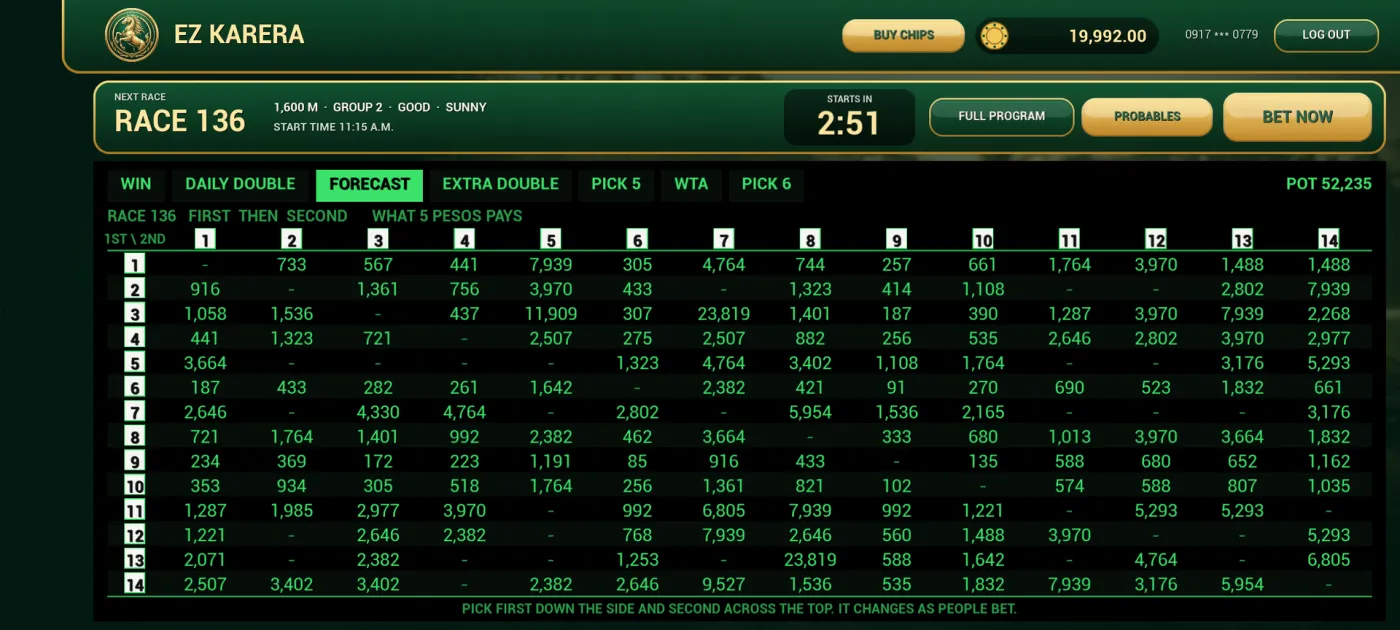
Most karerista do not choose between llamado and dehado. They mix them. A common way to play a Forecast or a Trifecta is to put the llamado in one position and spread a few dehados in the others. If the favorite runs where you expected and one longshot sneaks into the money, the combination can pay far more than a straight win bet on either horse.
The llamado tells you what the crowd thinks. The dehado is where you get paid for thinking differently.
EZ Karera shows you all of it: the probables before the off, the choice tags on the dividends board after, and a new race every five minutes to test your read.
Try it on EZ Karera
EZ Karera is a free 3D karera game with a race every five minutes and 30,000 free chips to start. Android only, 18+.
Become a tester